 ecchelmet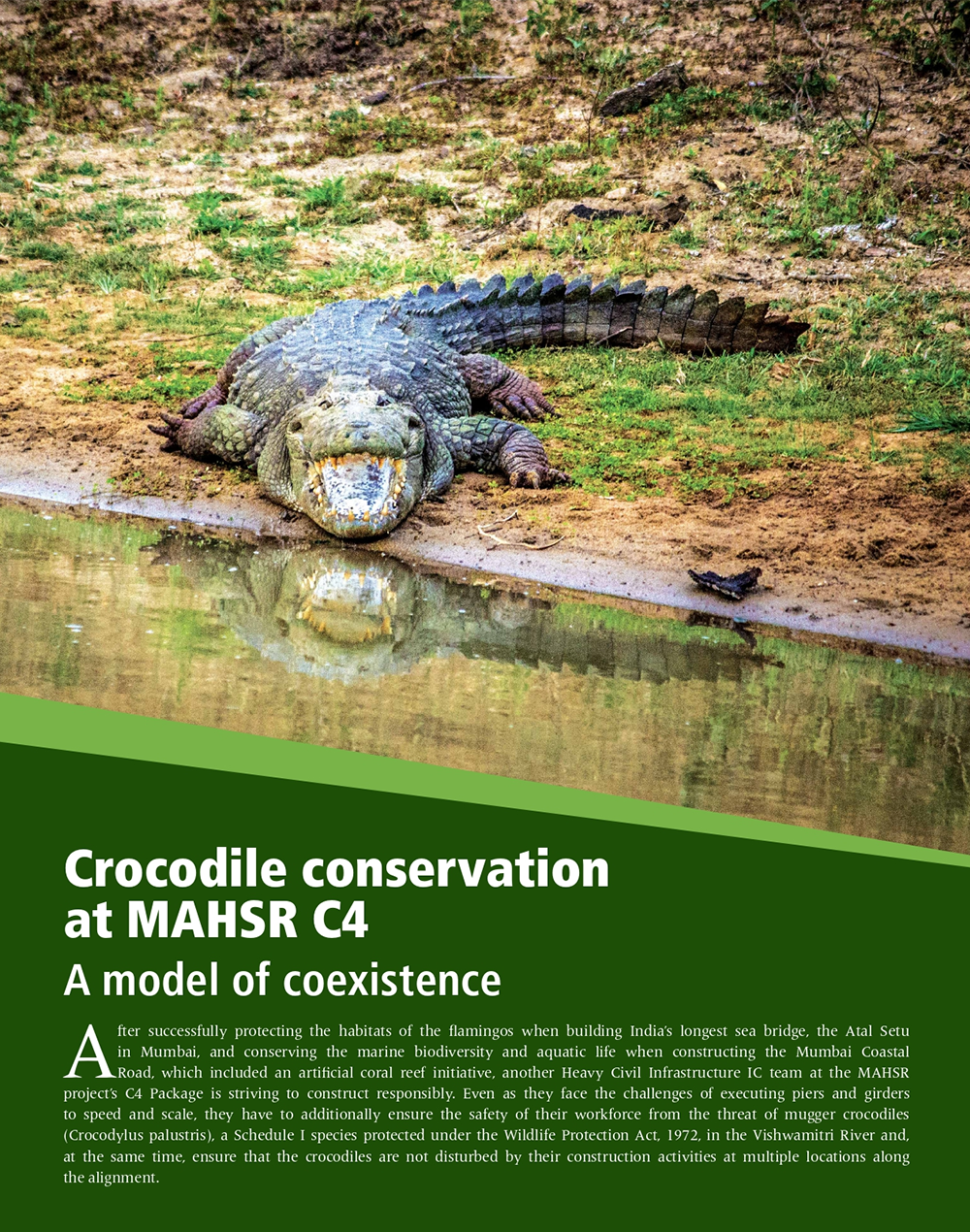
The team’s response, led by Head – EHS, HCI IC, Nigel Wirtz Cameron, has been to put in place a Crocodile Conservation Plan combining scientific planning, safety management, understanding the potential negative impact of construction on the crocodile population, and building community awareness to ensure speedy project progress.
Plans to keep the crocs and people safe
“We could have disturbed their nesting sites and reduced the availability of their prey, forcing them to migrate, which would have in turn reduced their numbers,” says Nigel. “Always sensitive to the ecology, we treated the river as an ecosystem, not just as another project site, recognizing the crocodiles as an integral part of the environment, which dictated our approach on planning our schedules to keep the crocs safe.”
The findings of a baseline ecological survey by biodiversity experts that mapped crocodile habitats, basking zones, and nesting sites formed the basis for their Crocodile Conservation Plan. “These findings helped us formulate specific control measures such as restricting access to sensitive areas and adjusting work timings around the breeding season,” remarks Mouli Durai, Head – Environment, HCI IC.


Always sensitive to the ecology, we treated the river as an ecosystem, not just as another project site, recognizing the crocodiles as an integral part of the environment, which dictated our approach on planning our schedules to keep the crocs safe.
Nigel Wirtz Cameron
Head – EHS, HCI IC

Encountering crocodiles inside the pile excavation threatened people’s safety, especially during the monsoons, for which crocodile handlers were deployed round the clock to avoid conflicts. “Safety signages have been put up at all locations where there is a likelihood of crocodile intervention, declaring them as ‘no-disturbance’ areas and fencing them off to prevent intrusions,” explains Head – EHS, MAHSR C4, Pradeshwarasingh M. “We therefore provided safe enclosures for the workers, away from the crocodile nesting areas.”
Safety signages have been put up at all locations where there is a likelihood of crocodile intervention, declaring them as ‘no-disturbance’ areas and fencing them off to prevent intrusions.
Pradeshwarasingh M
Head – EHS, MAHSR C4
Engineering solutions to preserve the ecosystem
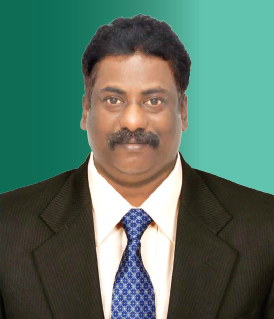
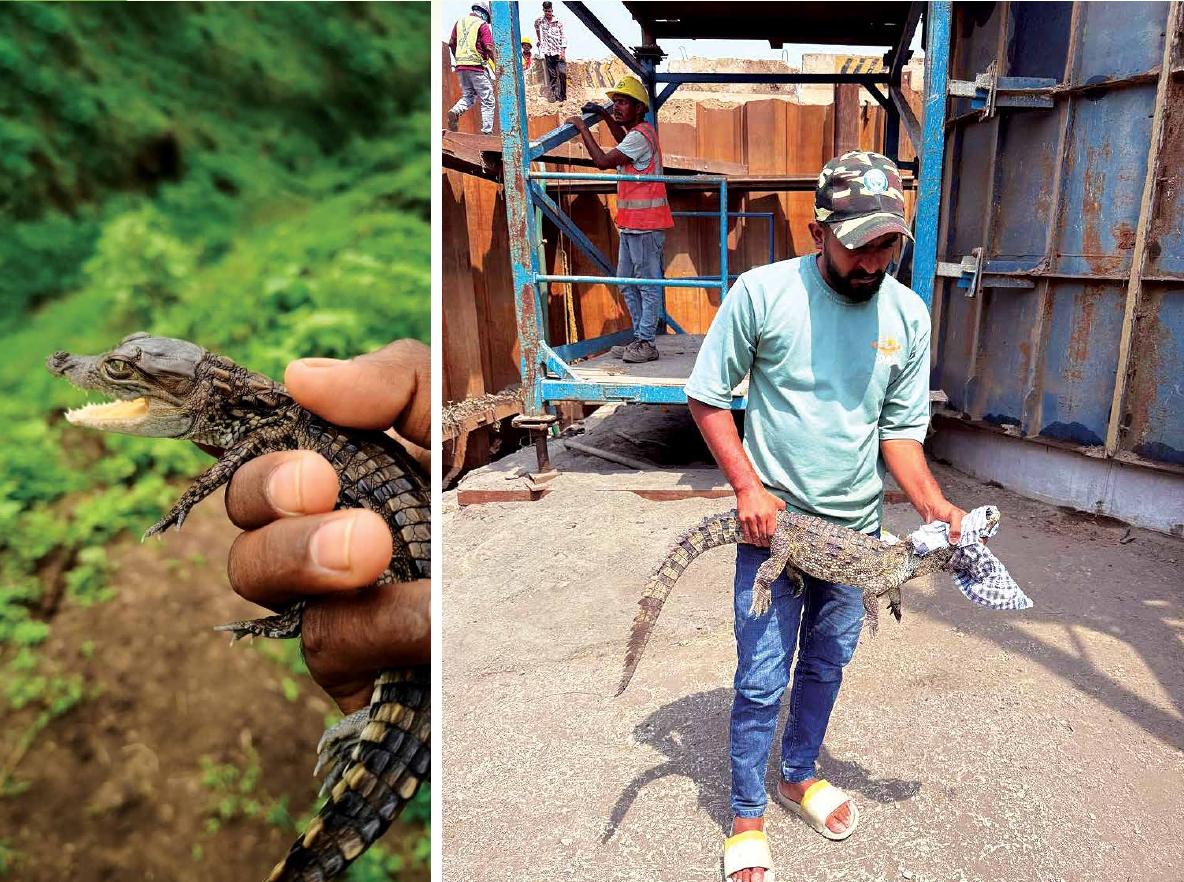
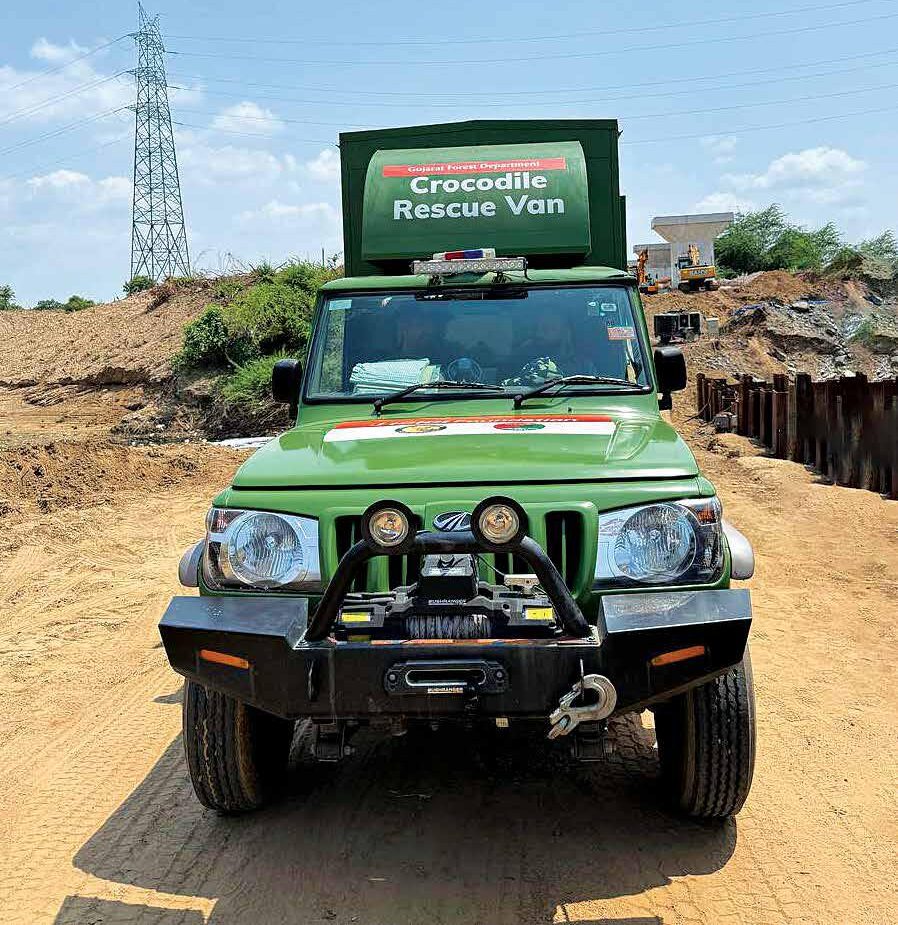
Conduit pipes to maintain uninterrupted water flow and movement pathways for aquatic life were some the team’s efforts to preserve natural river connectivity. “For abundant caution, we even engineered in-house crocodile entrapment equipment in case of an emergency,” reveals Pradeshwarasingh. In addition, experttrained specialized wildlife rescue teams equipped with capture cages and crocodile transport vehicles keep both humans and wildlife safe. “We have rescued and relocated 18 crocodiles from high-risk construction zones to protected habitats,” proclaims Vinod Kumar Agrawal, TFL Environmental Lead, MAHSR C4.
From fear to respect
As a part of awareness programmes for both workers and local communities to reduce their fear of crocodiles, over 150 personnel have been trained in safe practices in crocodile-prone zones, including what to do during sightings. “Safety PPEs, warning signages, crocodileexclusion fencing, and emergency protocols have been introduced across all worksites, while regular mock drills have ensured preparedness and minimized panic in the event of an encounter,” elaborates Sivakumar C, Project Director, MAHSR C4 – Section 5.
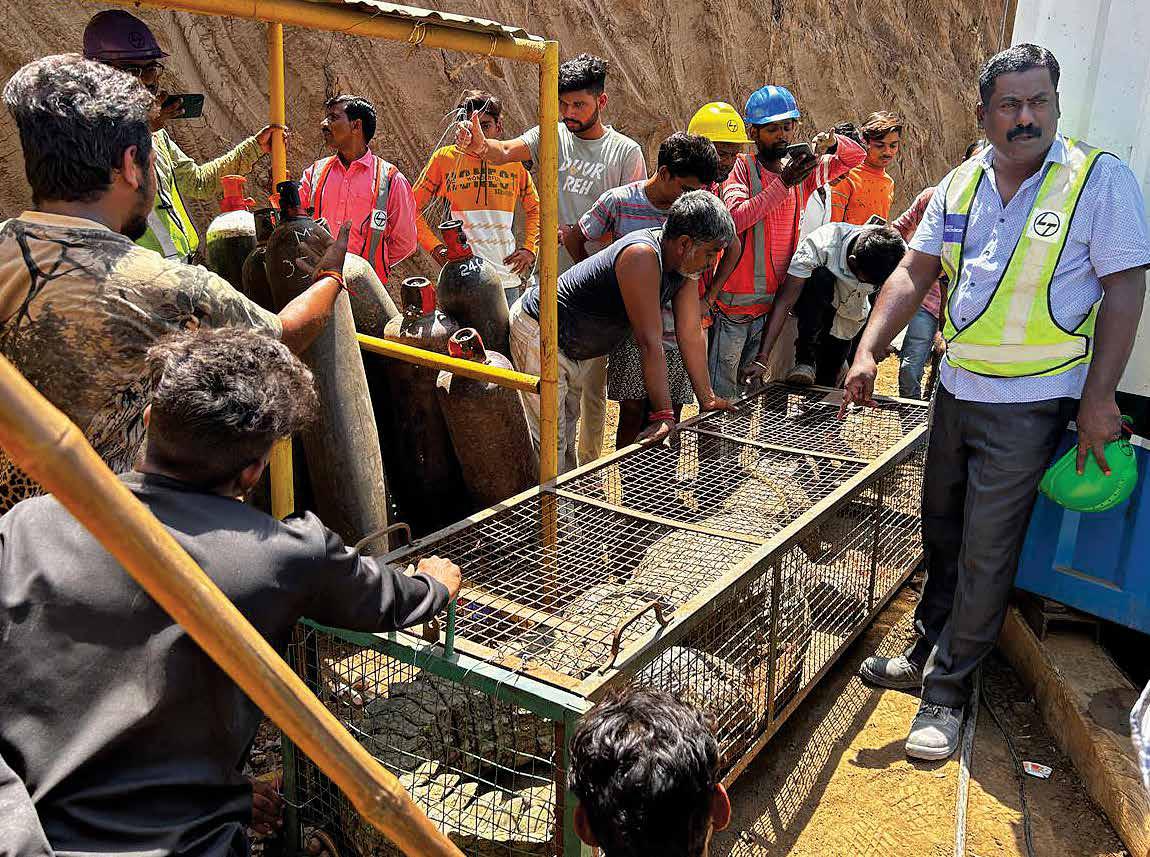
Measures to stay safe from crocodiles
- Dedicated crocodile monitoring teams to conduct regular patrols and report sightings
- SOPs for safe site operations near waterbodies
- Protective cages and warning signages to restrict unauthorized access to
nesting or basking areas - Rescue and emergency response systems with 24/7 coordination between
site teams, forest officials, and wildlife rescuers - Frequent mock drills on emergency response for crocodile sighting and
reporting
Safety PPEs, warning signages, crocodileexclusion fencing, and emergency protocols have been introduced across all worksites, while regular mock drills have ensured preparedness and minimized panic in the event of an encounter.
Sivakumar C
Project Director, MAHSR C4 – Section 5

Sivakumar recalls an incident during the 2024 floods when a crocodile entered his office, which was subsequently rescued and translocated to another part of the river.
By conserving the crocodiles, the project team has not only protected an endangered species but also indirectly safeguarded the larger biodiversity in the Vishwamitri ecosystem that includes birds, amphibians, and fish species dependent on the same habitat. “Our initiatives have further enhanced community awareness about the crocodile’s ecological significance, transforming public perception from fear to respect,” notes Nigel eloquently, and his team can take some credit for contributing to the rise in the mugger crocodile population from 275 in 2020 to 442 by 2025 in the Vishwamitri River region.
A model worth emulating
“Our project has set a precedent for wildlife-integrated infrastructure in India,” remarks Mouli with a satisfied smile. “Our efforts align with national and global frameworks such as the Wildlife Protection Act, 1972; the Environmental Impact Assessment (EIA) Notification; Sustainable Development Goals (SDGs) 13 (Climate Action), 14 (Life below Water), 15 (Life on Land); and BRSR Principle 6: Protection of the Environment.” He is delighted that their efforts have been recognized with CII’s Excellent Environmental Project Award for Biodiversity, presented at the 12th edition of the CII National Environmental Best Practices Awards.
Our efforts align with national and global frameworks such as the Wildlife Protection Act, 1972; the Environmental Impact Assessment (EIA) Notification; Sustainable Development Goals (SDGs) 13 (Climate Action), 14 (Life below Water), 15 (Life on Land); and BRSR Principle 6: Protection of the Environment.
Mouli Durai
Head – Environment, HCI IC
We have rescued and relocated 18 crocodiles from high-risk construction zones to protected habitats.
Vinod Kumar Agrawal
TFL Environmental Lead, MAHSR C4

The C4 team is proud of their track record of zero injuries or wildlife casualties during the entire course of construction, and their emphasis on safety and respect for biodiversity demonstrates how EHS is a crucial link between construction and conservation. With careful planning, awareness, and collaboration, even large-scale infrastructure construction, such as the country’s first Bullet Train project, can coexist responsibly with the natural world!