 ecchelmet


It is about working smarter rather than harder. The conditions are not in our control, and therefore our efforts should always be towards overcoming the challenges so that progress is not hindered in any way while, at the same time, ensuring that our people remain healthy and safe.
Nigel Wirtz Cameron
Head – EHS, Heavy Civil Infrastructure IC

Winters can be severe, especially in North India, and with the first touches of cold already blowing across several of our project sites, it is time to prepare to fight the cold. While the safety of employees and workers is always critical, the onus on EHS teams is greater to reinforce training, step up hazard identification & mitigation, and adopt cold-weather measures.
“Cold conditions can numb fingers, making it difficult to work despite wearing gloves,” states Nigel Wirtz Cameron, Head – EHS, Heavy Civil Infrastructure IC, listing out some coldrelated hazards. “Underfoot conditions can get slippery due to rain, wind chill is an ever-persistent threat, more vigilance is required to operate equipment that could pack up in the cold … the list is long,” he smiles grimly. “The reality, however, is that work cannot stop unless absolutely unavoidable, so we must arm ourselves adequately to maintain progress.”
Speaking from his experience of having worked previously in colder conditions overseas, and managing sites in Jammu & Kashmir, Uttarakhand, and other states in the peak of winter in his current role, Nigel shares a few quick cautionary notes to tackle the cold. “It is critical, especially in our Indian context, for workers to be aware of coldrelated health hazards. Their physical condition should be closely monitored, they should be allowed to take breaks in warm areas, ideally schedules should be rearranged so that work happens during the warmest part of the day, and it is advisable for them to work in pairs to assist each other in the event of an emergency.” Time is critical when dealing with cold-related injuries, and a few minutes can be the difference to save lives.
Dress to beat the chill
The first form of defence against the cold is adequate layers of appropriate clothing. Loose clothes are preferable as they do not hinder circulation, along with masks to cover the face, mouth, and neck; helmets; gloves; and waterproof boots. “Apart from the normal PPE, it is better for employees and workers to wear high-visibility clothing, especially in a busy site with lots of vehicle movement,” opines T Prabhakar, Head – EHS, Power Transmission & Distribution IC, who mentions the 220 kV Kochik–Rangdum Transmission Line project in Kargil where work grinds to a halt from October to March due to the bitter winter. Commuting to and from sites becomes hazardous due to fog, necessitating drivers to be trained in defensive driving. Imagine the plight of workers perched high up on tall towers during stringing, completely exposed to the elements!

It is important for both our employees and workers to be aware of the signs and symptoms of health conditions they might encounter during the winter months to be better prepared to either give immediate assistance or seek help.
T Prabhakar
Head – EHS, Power Transmission & Distribution IC
One irritating problem everyone faces during the cold months is to get clothes, gloves, and footwear to dry, and Nigel suggests providing adequate drying facilities.
Safe to proceed
Site conditions can change dramatically in cold conditions. Careful and meticulous site inspections before every shift are therefore essential every day to clear the site before allowing work to start. Risks of working at height escalate when working on wet, slippery roofs, and it pays to tread carefully on or around wet scaffoldings, walkways, stairs, and roads.
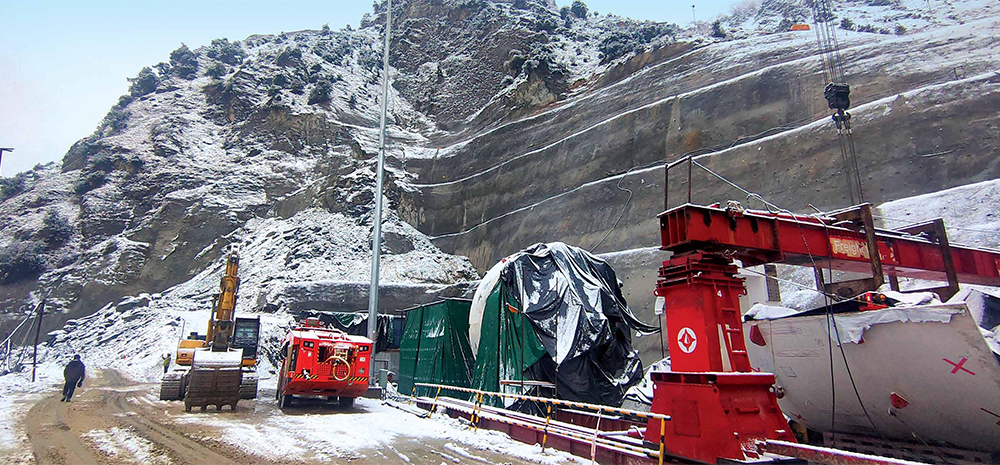
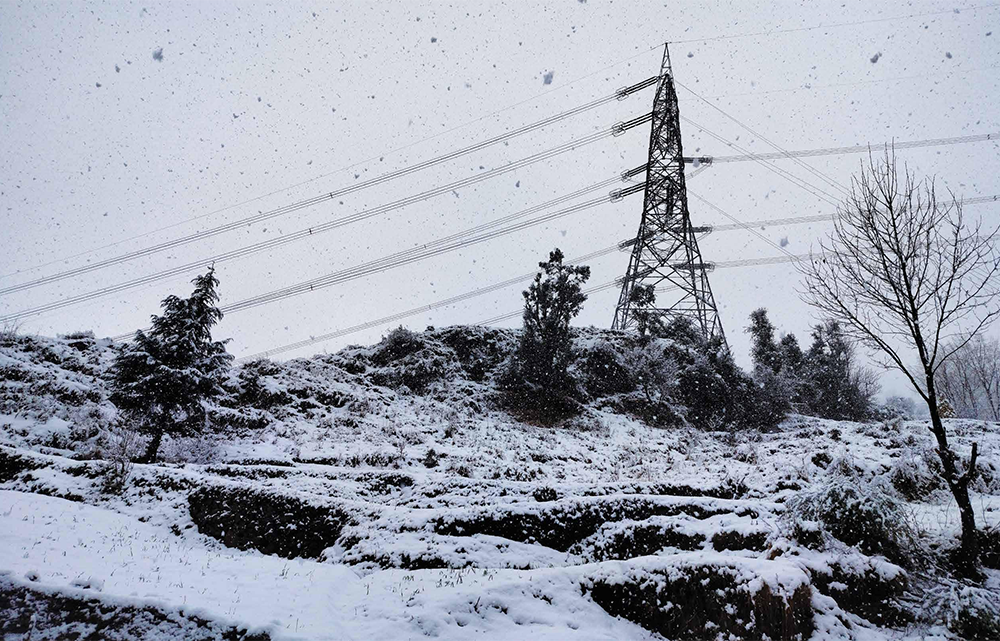
While cold weather conditions cannot be changed, work methods and equipment can be replaced with safer alternatives, like workers using enclosed platforms with much lower fall risk instead of slippery ladders. Creating wind barriers to minimize wind chill and providing insulated metal tools & equipment are other ways to keep the workforce warm and out of harm’s way, like they do at PT&D IC’s 400 kV D/C Kishenpur– Dulhasti TL (KDTL) project site in Udhampur in the Jammu region.
Watch out for warning signs
“It is important for both our employees and workers to be aware of the signs and symptoms of health conditions they might encounter during the winter months to be better prepared to either give immediate assistance or seek help,” cautions Prabhakar. They must be made aware of cold stress, another dangerous condition that can result in rapid heat loss from the body, leading to injuries or illness. Breathlessness, dizziness, chest pain, and feeling weak & disoriented are all telltale signs of brewing trouble that must be immediately addressed.
Frequent breaks, if possible, in warm enclosures are recommended, and everyone should stay hydrated by consuming adequate amounts of fluids, preferably hot. It pays to remain alert to weather conditions and plan schedules accordingly.
“At the end of the day, it is about working smarter rather than harder,” remarks Nigel. “The conditions are not in our control, and therefore our efforts should always be towards overcoming the challenges so that progress is not hindered in any way while, at the same time, ensuring that our people remain healthy and safe.”