 ecchelmet
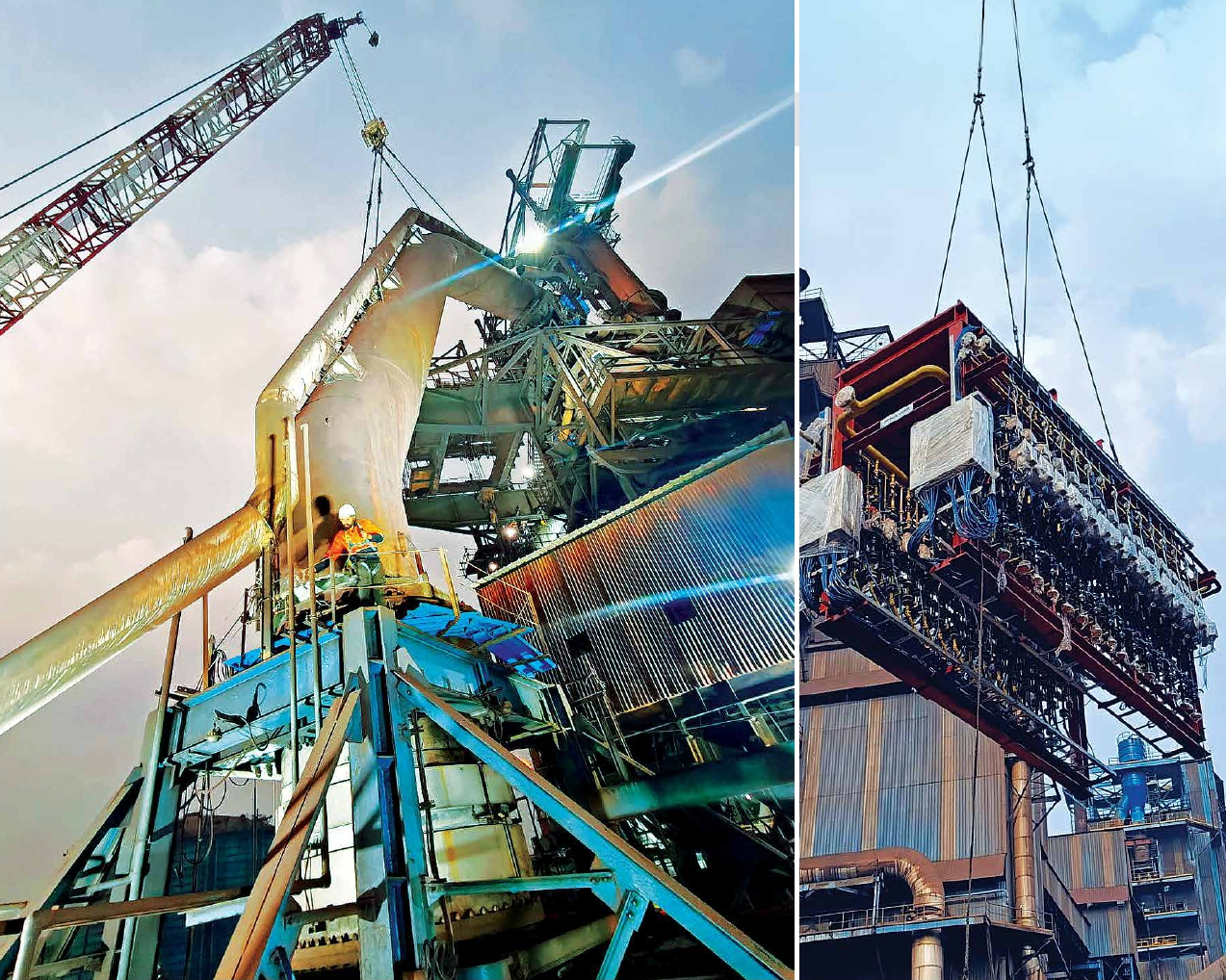
Modular erection & dismantling processes adopted for increased productivity and reduced hazards like work at height and material handling, with meticulous planning by EDRC and site execution
Certainly, completing the shutdown was immensely satisfying for Pranava and his team, but what must have been even more gratifying was the recognition and appreciation from the TSL team, further consolidating the strong, long, and successful association between TSL and L&T.
Navigating complex issues
The presence of an operational H blast furnace, live rail logistics, movement of hot metal to LD shops, and lack of space to operate cranes made dismantling the 22 m tall furnace even more complicated. A major safety hazard for EHS Lead, Ajay Kumar Poddar (AKP), was dealing with aging, rusted infrastructure during dismantling and erection. “To address the high risk of probable collapses or failures, we conducted thorough stability checks and controlled dismantling to avoid incidents,” he notes reassuringly.
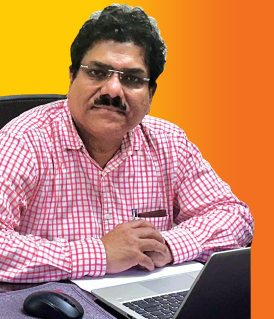

The broad scope of execution called for a high level of planning, coordination, risk assessments, coordination, ensuring safety at every stage, and working in a sensitive brownfield environment that involved constant interface with operational facilities and live systems, elevating risk levels.
Pranava Kumar Vatsa
Project Director

Managing the movement of heavy vehicles and equipment within constrained spaces and operating amidst active utilities was particularly stressful for the team in addition to keeping the workforce safe from potential hazards such as exposure to carbon monoxide (CO), man–machine interferences, multilevel working conditions, and being in the ‘line of fire’. Their only access ramp to the Cast House lacked space for vehicles to reverse, necessitating nearly a thousand trips to deliver material, while the stringent road safety regulations imposed by TSL on Over Dimensional Consignment (ODC) logistics was yet another big hurdle to overcome.
Placing Safety as top priority
That his site has achieved 4 million safe manhours without any LTI is a matter of pride for EHS In-charge, Biswajit Dey (Deputy General Manager – EHS). “Recognizing the complexity of the conditions from the very outset, we implemented proactive and comprehensive measures to safeguard our workforce,” he says with quiet determination. High-risk operations like rigging & lifting were vigilantly supervised by a Senior Foreman and Site Engineer, with only qualified lifting specialists – riggers, operators, and foremen – authorized to perform these critical tasks. Every lift strictly adhered to a detailed, approved lifting scheme to ensure safety and operational integrity.
Biswajit and his team have ensured that their 3,500-strong workforce undergo induction training and skill tests as per TSL’s protocols. Job-specific training is conducted in small groups, mass sessions to share knowledge, improve awareness, instill a sense of responsibility, and recognize safety-conscious employees. Daily Toolbox Talks are held at work locations to share task-specific hazards, lessons learnt, and preventive measures. He attributes the team’s continued success to their continuous engagement and motivational programmes that have helped maintain high morale and make the workforce committed to safety in this most demanding project.
Given the fast-paced nature of shutdown activities, daily and weekly EHS performance reviews are prioritized.
“EHS is the first item on the agenda in our daily review meetings with TSL teams, and during our weekly EHS Safety Committee meetings, we discuss incidents, key risks, and improvement actions,” reports AKP, for whom handling the shutdown brought back memories of having revamped the GBF for TSL back in 2005. “I was aware of the complexity, limitations, and challenges associated with this project, and although I started with a comparatively new EHS team, our performance has been par excellence thanks to our focus and the invaluable support of the EHS Head Office team,” he adds with gratitude.
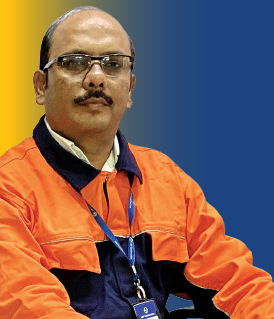
Recognizing the complexity of the conditions from the very outset, we implemented proactive and comprehensive measures to safeguard our workforce.
Biswajit Dey
EHS In-charge
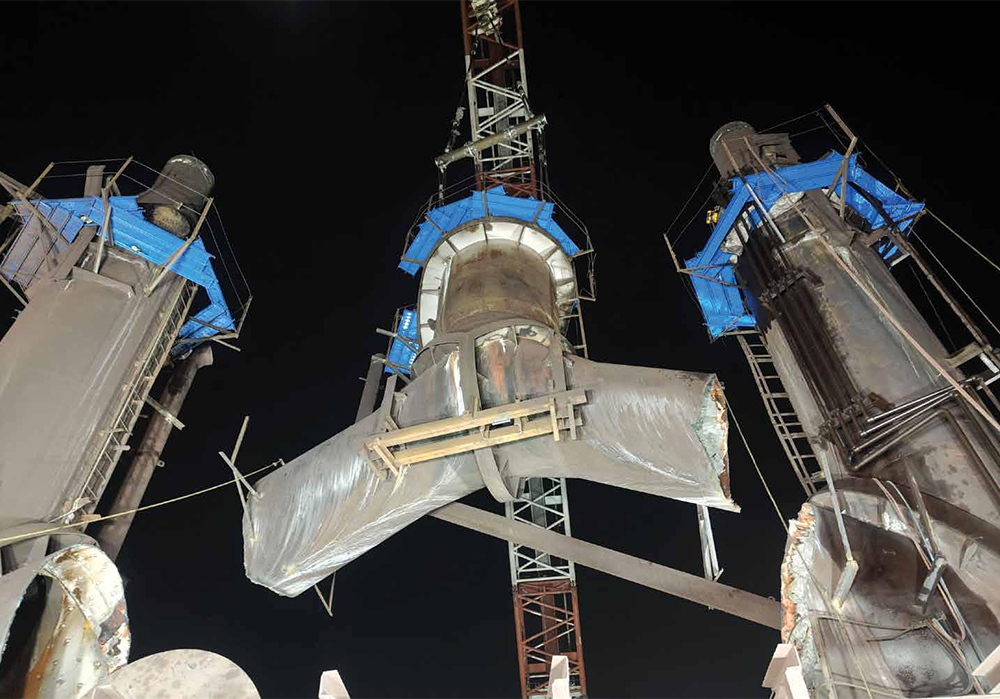
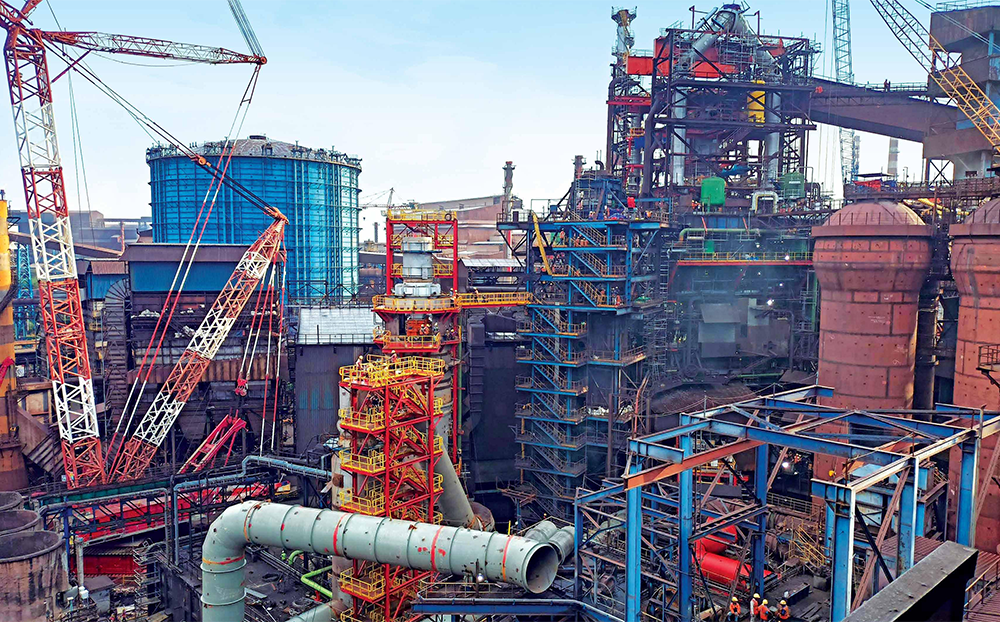
The right tool for the right job: The high-capacity 1,250 T crane proving its worth
Some of the team’s other good EHS practices include strictly adhering to EHS systems like permit to work, engaging IRATA-certified rope access teams for critical height work, and deploying a certified scaffolding agency and well-defined scaffold management systems.
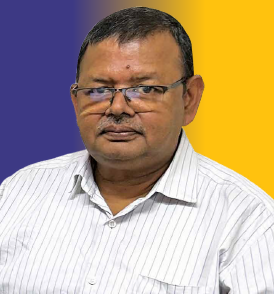
I was aware of the complexity, limitations, and challenges associated with this project, and although I started with a comparatively new EHS team, our performance has been par excellence thanks to our focus and the invaluable support of the EHS Head Office team.
Ajay Kumar Poddar
EHS Lead
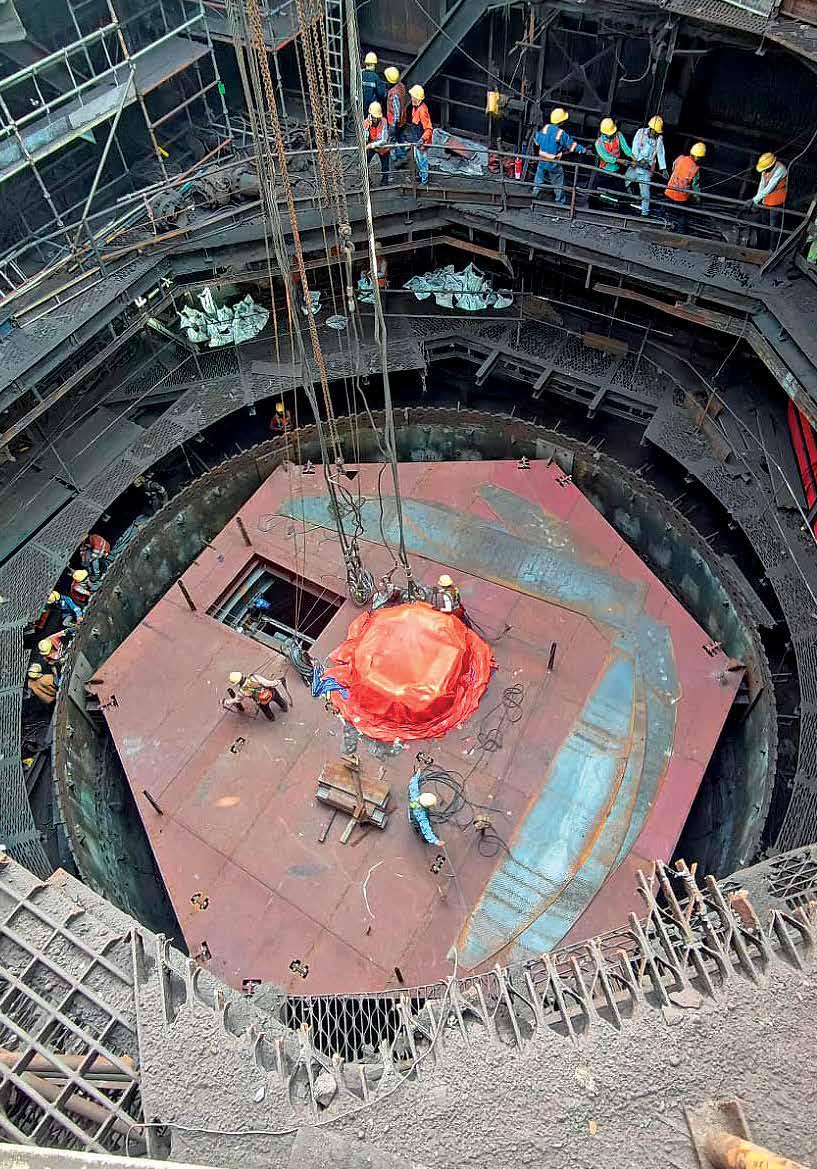
Multilevel working & arrangement for working inside the furnace shell
Driven from the top
Pranava’s task has been made a wee bit easier with M&M IC’s senior leadership lending their weight to drive safety, with numerous site visits by IC Head, T Kumaresan; BU Operation Head, A B Das; Operations Head, Hare Ram; IC EHS Head, K N Sen; and P&M Head, S Nachiappan. “The GBF shutdown is a testament to collaborative excellence, leadership-driven safety, and resilience,” sums up Pranava. “Despite immense challenges, we executed with discipline, innovation, and a strong will to win, demonstrating that with the right planning, teamwork, and unwavering focus on safety, anything is possible!”