 ecchelmet
 Tandem lifting to a nicety
477 MLD WTP Chandrawal Package 1 Project
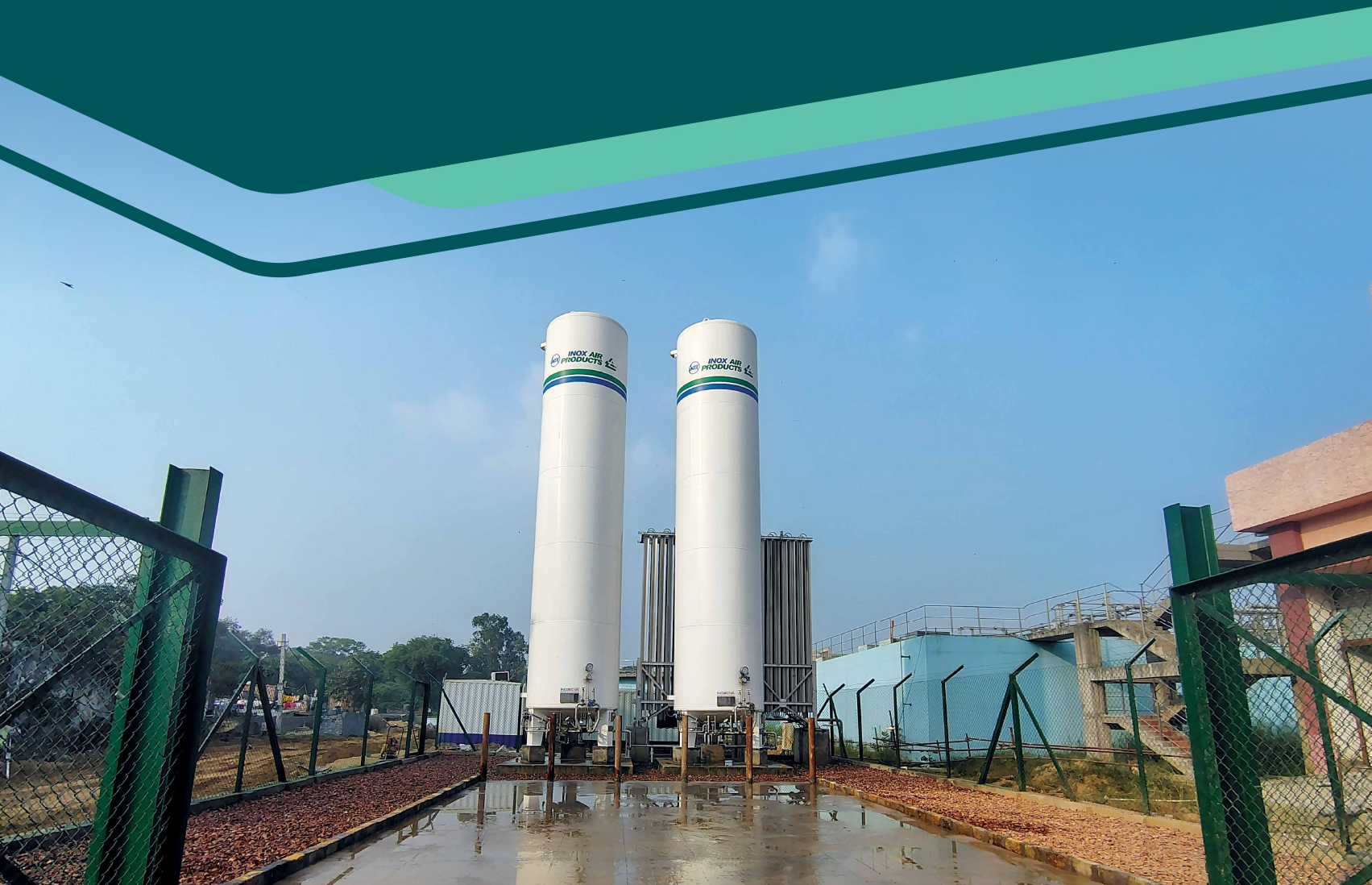
A team from WET IC led by Project Manager, Kanishka Binod Gupta, is constructing a state-of-the-art 477 MLD Water Treatment Plant (WTP) in the heart of New Delhi which, when completed, will supply water to parts of central Delhi, including the prestigious Lutyens’ Zone. What sets this WTP apart is that it incorporates advanced processes such as ozonation for pre-disinfection (as an alternative to chlorine) and a Dual Media Rapid Gravity Filter with Granular Activated Carbon (GAC). When deploying such advanced processes, a significant challenge they encountered was to safely deliver and store the Liquid Oxygen (LOX) required to supply oxygen to the ozone generators.

By following a structured, pre-approved, and risk-controlled lifting plan, we erected the LOX tanks safely and successfully, without any incident or deviation from the approved methodology.
Kanishka Binod Gupta
Project Manager

Understanding unpredictable ozone
Ozone is produced when oxygen (O₂) molecules are dissociated by an energy source, for example, a highvoltage electrical discharge using ozone generators, into oxygen atoms which then collide with other O₂ molecules to form ozone (O₃). An extremely reactive and unstable gas, ozone is used for disinfecting wastewater due to its powerful oxidizing properties. A cryogenic fluid, LOX is used as the feedstock for ozone generation systems, providing a stable and high-purity oxygen source. Since it cannot be stored directly due to its instability and rapid decomposition, LOX is efficiently stored in cryogenic vessels under regulated conditions and handled in strict adherence to safety standards to prevent risks associated with its low temperature and high reactivity. Of course, by storing it the team has it on demand for ozone production.
While the use of multiple small cylinders to store LOX was considered far too risky and hazardous, the project team opted to use two cryogenic vessels, each approximately 11 m long, weighing 8.5 MT with a capacity of 21 KL, to fulfil the demand for oxygen for 15 days. Rejecting the single-point lifting approach as too risky, the team considered tandem lifting, which involves using two cranes simultaneously to lift the load from opposite sides.
Ensuring precision lifting
A precise operation, tandem lifting requires both cranes to lift a single load at the same time, ensuring balanced load distribution to prevent tilting or swinging. “Tandem lifting requires careful planning, synchronization, and constant communication between crane operators, engineers, safety personnel, and the project team to ensure safe and controlled operation,” points out Kanishka. Thanks to two months’ planning, his team was equipped with the right methodology, ready availability of the right resources, and project-specific SOPs. The close coordination between the CMPC cell, vendor representatives, and the P&M, EHS, and site teams contributed to their success.
We conducted a comprehensive HIRA to identify potential hazards such as crane instability, load swing, and possibilities of rigging failure, based on which our engineering controls and preventive measures were implemented to mitigate all risks to ALARP.
Ameer Faisal
EHSO
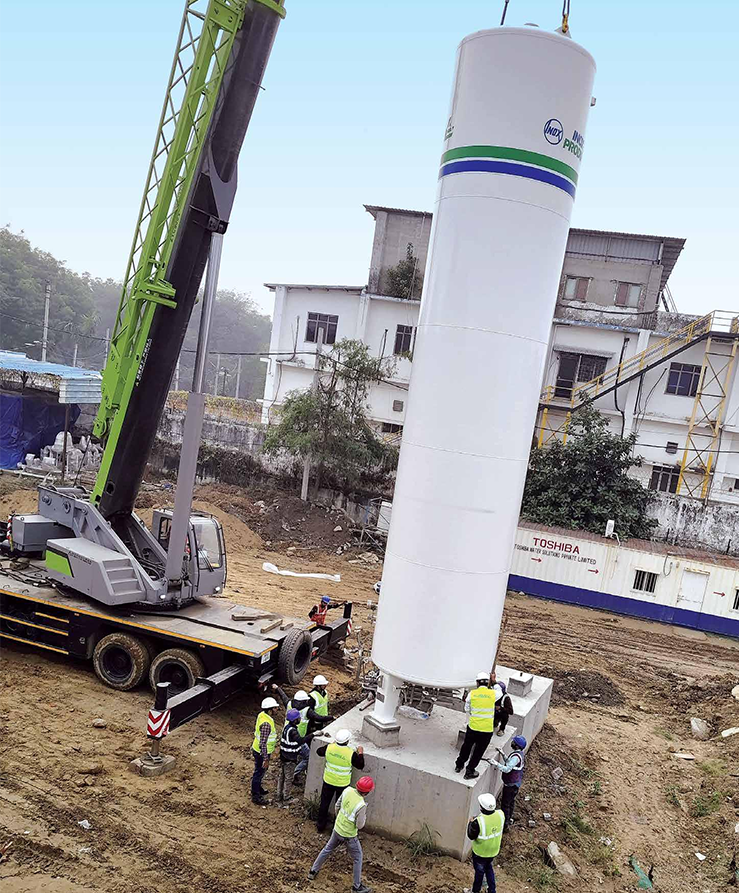
Prior to execution, all IMS documentation and approvals were completed, including conditional approvals from the IC & BU, a verified rigging plan, SEC card initiation, and equipment inspection records, and the operation was smoothly carried out by skilled & trained riggers, helpers, and a competent lifting supervisor. A pre-lift briefing and toolbox talks ensured clear communication and helped every team member clearly understand his role and responsibility.
The cryogenic vessels were successfully lifted and installed using two cranes working in precise coordination that carefully lifted, manoeuvred, and placed the vessels into their designated positions, following the unloading and erection scheme provided by the Construction Methods & Planning Cell (CMPC), safety protocols, and engineering standards.
“Safety was our top priority throughout the lifting and installation process, having conducted a comprehensive Hazard Identification and Risk Assessment (HIRA) to identify potential hazards such as crane instability, load swing, and possibilities of rigging failure, based on which our engineering controls and preventive measures were implemented to mitigate all risks to ALARP (As Low As Reasonably Practicable),” notes a pleased EHSO, Ameer Faisal.
“By following a structured, pre-approved, and risk-controlled lifting plan, we erected the LOX tanks safely and successfully, without any incident or deviation from the approved methodology,” assures Kanishka. He adds proudly, “This achievement reflects the team’s strong commitment to safety excellence, planning discipline, and operational control in all critical lifting operations.”