 ecchelmet
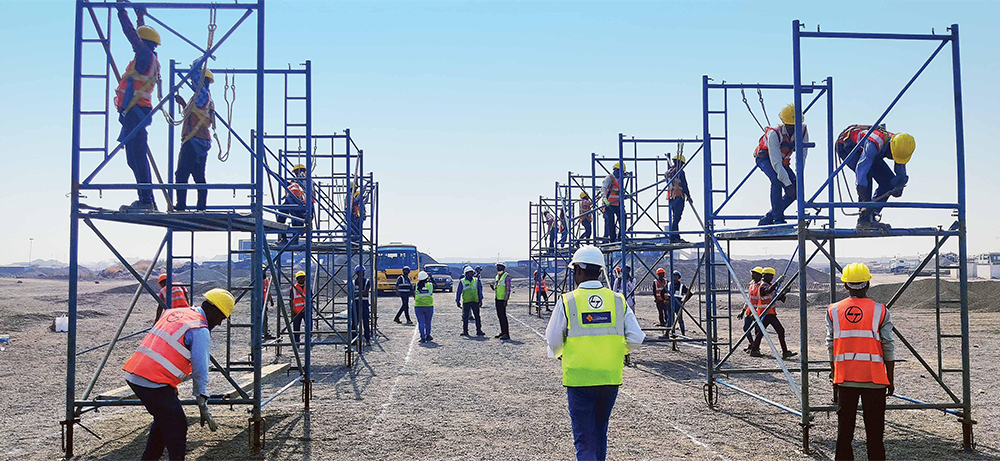
Hands-on scaffolding safety campaign with live demonstrations on safe work-at-height practices
From analytics to action
Safety observations from over a year and subsequent trend analysis of unsafe acts / unsafe conditions (UA/UC) threw up recurring issues in four critical areas: Work at Height, Scaffolding, Material Handling, and Electrical Safety, giving Jeevan Rao, Head – EHS, TI IC – RBF SBG, and his team valuable food for thought and action. “Ours is a purely data-driven initiative that not just identifies risks but acts on them at the site level,” he remarks, “and although technology and analytics have given us visibility like never before, safety improves only when data converts into action.”
Led by a dedicated task force of Project Directors, Subject Matter Experts from P&M, Competency Cells, and the Construction Methodology & Planning Cell (CMPC), each campaign ensures that the material is technically robust and practical for field application.
A structured, site-centric approach
Focusing on the four critical areas identified, Jeevan & team targeted 33 RBF project sites across India to roll out their robust campaign that combined classroom and practical learning through training modules, awareness videos, toolbox talks (TBTs), and mock drills. Site-specific contests, quizzes, and recognition drives improved engagement and participation. “Our goal was not to add more checklists but to make learning visual, interactive, and site-specific to change behaviour, not just compliance,” explains Yadhukrishnan R, Assistant Manager (EHS).

We now see trends as opportunities for improvement, not just statistics to report, and have noticed a visible shift in mindset, from reactive correction to proactive prevention.
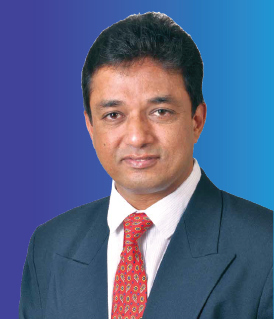
Jeevan Rao
Head – EHS, TI IC – RBF SBG

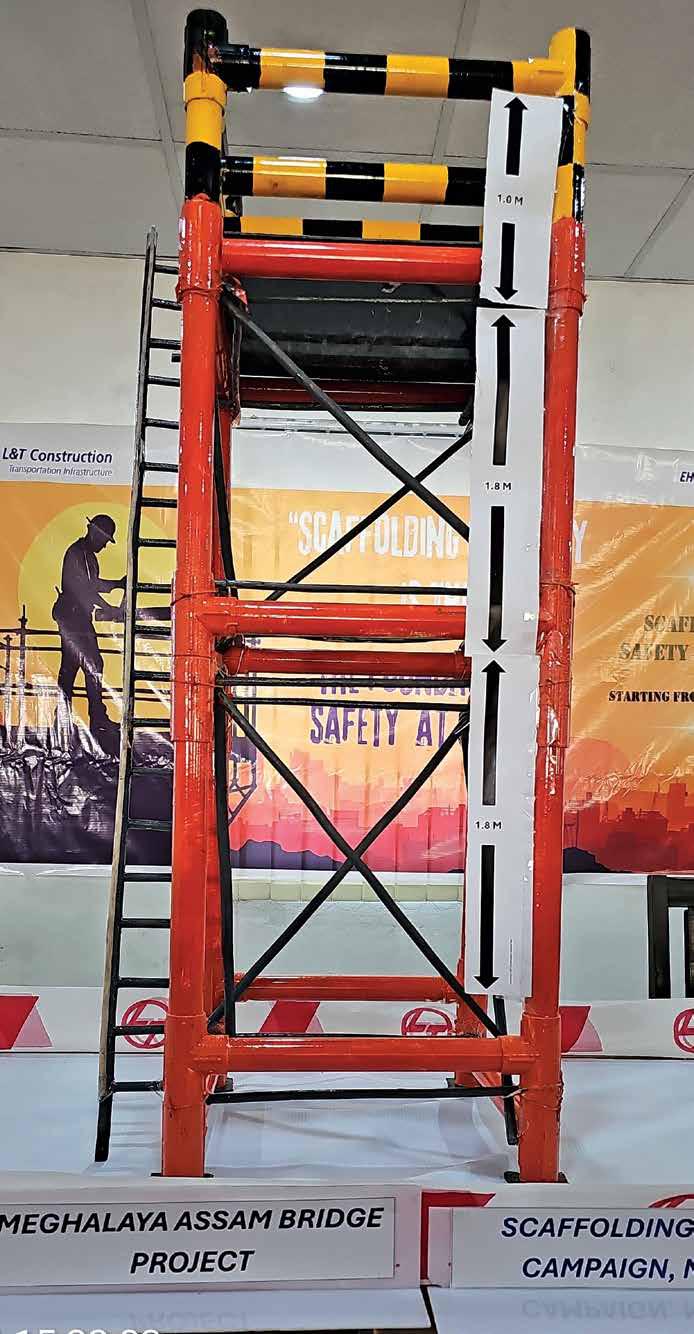
Prototype of scaffolding arrangements to educate the workmen on safe scaffolding practices
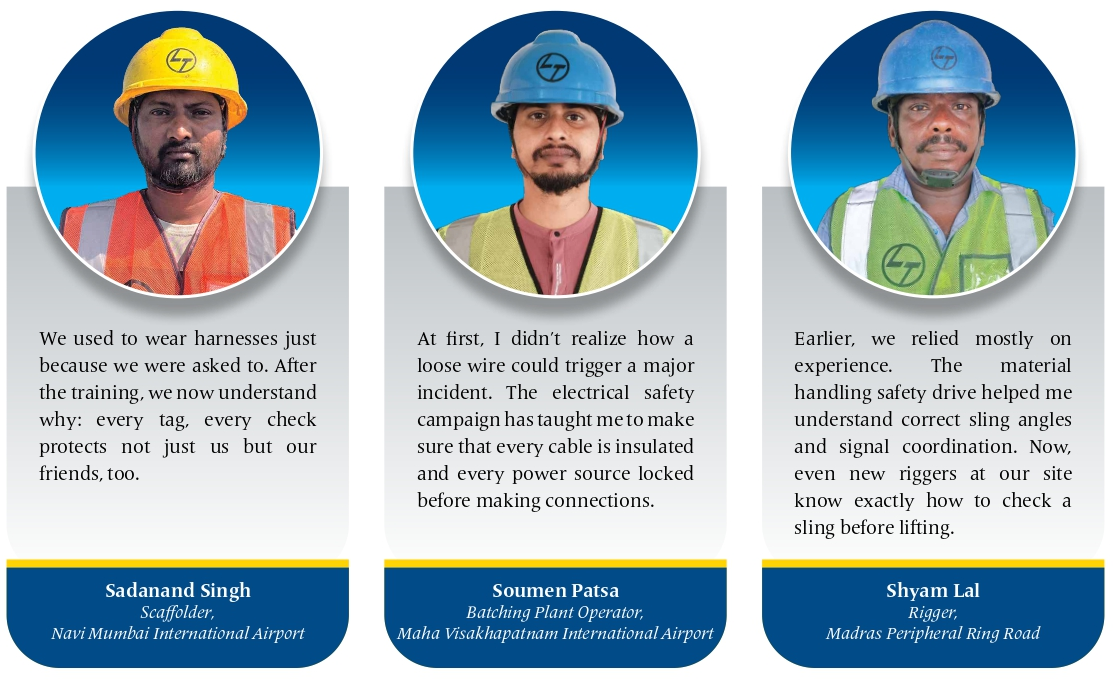
During the electrical safety campaign at the Maha Visakhapatnam International Airport (MVIAL) site, cable safety management was identified as a focus area, while the work-at-height safety campaign proved useful at the Meghalaya Assam Bridge Project (MABP) through live fall-arrest and rescue drills, where supervisors practised real-time retrieval operations. For riggers at the Madras Peripheral Ring Road Project, the material handling campaign changed long-held habits, while scaffolders at the Navi Mumbai International Airport Project learned to view safety differently. “These are just some examples; our campaign has certainly been impactful, for we have successfully course-corrected or even eliminated certain behavioural risks associated with these four activities,” reminds Yadhu.
Our goal was not to add more checklists but to make learning visual, interactive, and site-specific to change behaviour, not just compliance.
Yadhukrishnan R
Assistant Manager (EHS)

Leadership in action
The campaign has gathered a head of steam thanks to leadership participation, with Project Heads conducting walkdowns, ensuring that every observation results in immediate corrective action. “When project leadership stands shoulder-to-shoulder with workers, safety becomes everyone’s responsibility,” observes Shanmugha Sundaram, EHS Head, Madras Peripheral Ring Road Project.
Individuals who demonstrate exemplary adherence to safety practices or proactively identify hazards are recognized at the close of each campaign, reinforcing that safety is all about shared ownership.
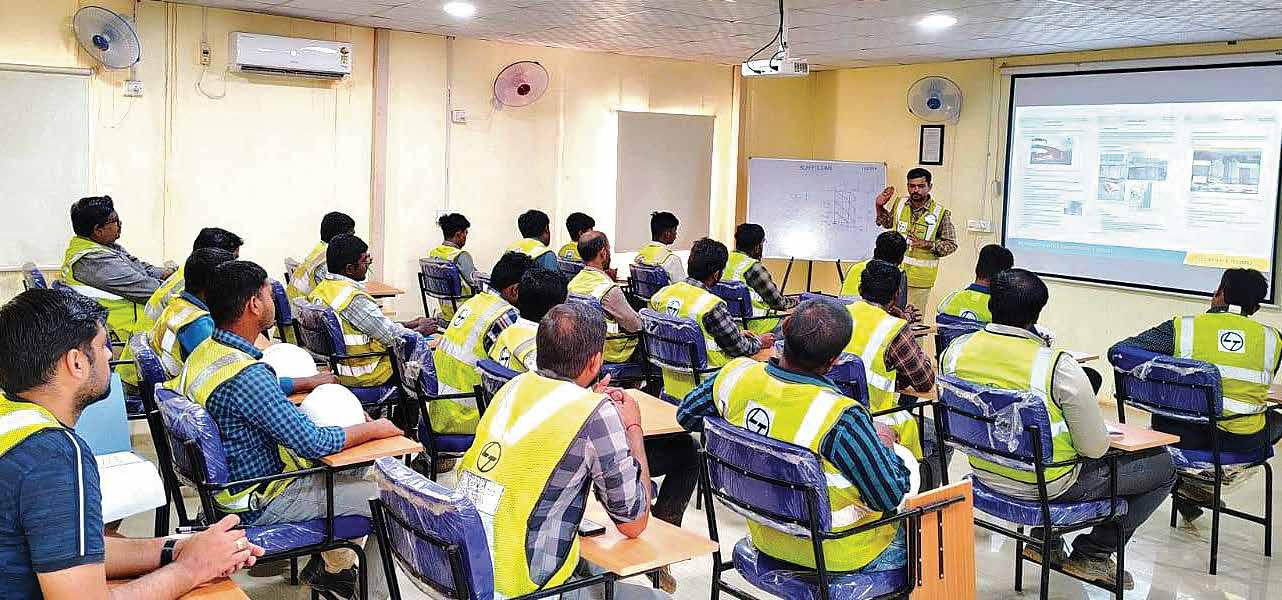
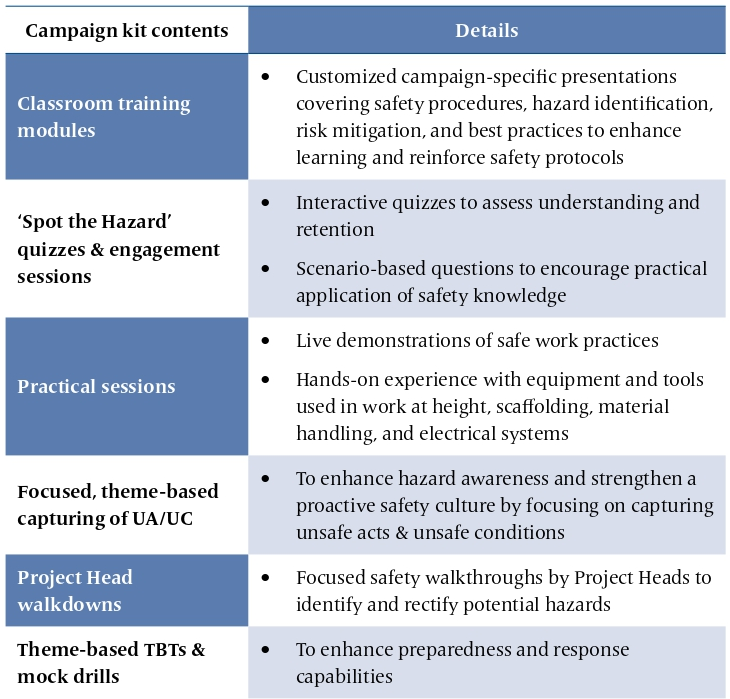
Customized campaign-specific classroom sessions
Outcomes speak louder
Quantitative trends validated the impact and reflected the cultural shift:
- UA/UC reporting doubled, indicating a stronger observation culture
- Work-at-height UA/UC dropped from 21% to 14% within six months, showing
strong behavioural correction - Safety Lead Indicator scores improved from 0.09 to 0.21, moving closer to the
0.30 benchmark, a measurable improvement in proactive safety behaviour - Near-miss reporting tripled, showing increased awareness and proactive
identification
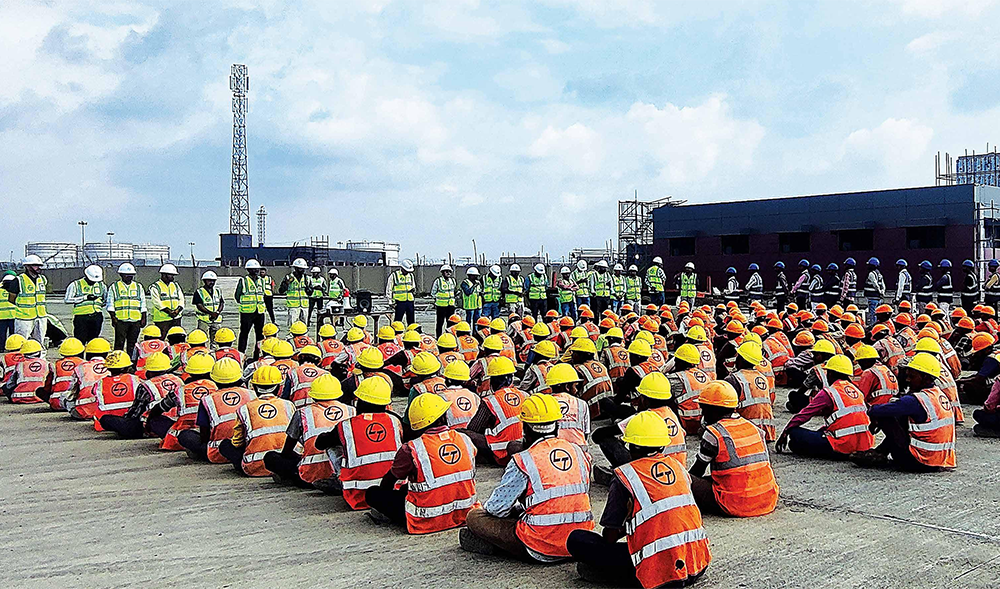
Theme-driven mass TBTs to reinforce campaign goals
Happy that their data-driven campaign is paying rich dividends, Jeevan says, “We now see trends as opportunities for improvement, not just statistics to report, and have noticed a visible shift in mindset, from reactive correction to proactive prevention.” Their campaign proves that data can do more than measure safety; it can shape behaviour, reiterating the fact that the safest sites are built not only with sound engineering but also with informed, empowered teams who understand that every safe act counts.